Monday, January 29, 2007


MLS: MAJOR LONG SHOT (EVEN WITH BECKS)

Right now, there's major buzz and butterflies over David Beckham (pictured), painting a beautiful picture for Major League Soccer. But... for right now. The question everyone ponders is: Will MLS eventually smear into blurriness again or will Beckham change the economics of the sport, where MLS clubs are doubling their revenue?

On the outside, "Becks" is an impressive portrait to gleam about (same with his wife, Victoria, by the way). Thanks to his good looks, charm and soccer "bending" skills, sponsors such as a Pepsi, Gillette, Motorola and adidas have swarmed for his on-camera services.
He even made his walk-on mark on the big screen in the 2002 hit movie, "Bend It Like Beckham." Since 1999, when he finished second in the FIFA World Player of Year voting (also in 2001), Beckham has been the most famous and recognizable international athlete not playing or living in the United States.

Until now.

The King Kong of soccer is finally here, but he's not the same player he once was - that's why England kicked him off its national team. The question if whether or not Beckham, who's old in soccer standards at 31, can elevate the value and skill level of the entire league should be secondary; more importantly, can he spice things up for his own team, the Los Angeles Galaxy (and not just by having Posh Spice in attendance)?

For MLS' sake, let's not be too critical about Beckham arriving in America. Business wise, the return on his investment will be significant; once the season starts in April, the Galaxy will be a sold-out traveling circus - Posh Spice included - that will resemble Michael Jordan's Chicago Bulls teams (in fact, Beckham will be wearing No. 23). What concerns me more is how professional soccer is played and marketed here in this country. Why is it that more than 90 percent of kids between the ages of 6 and 12 play soccer, but when they get older they transition to basketball, baseball and football? The reason is that kids are introduced to soccer by default, usually before any other sport, because it's extremely easy to play. As they get older, their attention strays from soccer because their connection to role models heavily favors basketball, baseball and football players who are marketed across all media platforms. Soccer hardly gets any real exposure until the World Cup rolls around every four years. What the MLS needs is a major tune-up - a peppier engine for a league falling behind in the pack and not favored to win.

If I were MLS commissioner for a day, I would make the sport resemble NBA basketball more by increasing the pace and scoring of the game while marketing the moves and styles of the players. For on-the-field play, I would shorten the field, break up the time from halves into four quarters and implement unlimited substitutions. I would also increase the distance of the penalty shot to make it more challenging for the kicker (The way it's set up now, it's basically a chip shot for the shooter, total guesswork for the goalie and, therefore, boring for the viewer.)

But what's really going to drive American fans into MLS seats is their interest in seeing homegrown talent represented on the field and brand name players who possess flair and wizardry with the ball. Right now, the United States national team is No. 31 in the FIFA world rankings. That needs to change. The MLS needs to strengthen its grasp on American soccer by pumping more resources into its grassroots programs for youngsters. The talent has to get better first and foremost, and if it takes luring renowned international coaches with big money to head some of these camps, then so be it. American fans simply need to start a following for up-and-coming talent and eventually revere them as one-name soccer stars like Brazil's Ronaldinho and Portugal's Figo.

A soccer "street" culture should also be developed, similar to what Nike basketball created several years ago through a series of "freestyle" commercials, in which NBA and streetball players demonstrated their fancy dribbling. With the MLS, the league should focus their marketing on what anyone, from inner cities to middle-class suburbia, would drool over on YouTube - trickery and innovation of a backyard sport - via an integrated program (print, online and television advertising) as well as event planning in top markets.

Now that you've got Becks, really soc it to 'em, Major League Soccer. Bend your backbone just a little, eh mate?

Monday, January 15, 2007


RUNNING WITH THE BROADCAST BULLS

On football Sundays, most of us have the luxury of sleeping in and waking up just in time for our favorite 1 p.m. kickoffs. Our laziness stitches us to our couches, and we only get up to make a beer run or to answer the door for the pizza delivery guy. Not even champagne and caviar could compete with days like these.

But when we're just flipping on our TVs, a small number of deadline-driven and technically-trained broadcast bulls have already been preparing for our Sunday blessing, speaking an abbreviated language that none of us could understand. I know because I was in NASA's version of a sports control room last month at the Meadowlands for the Buffalo Bills vs. New York Jets game.

Here's how my day went working as a "runner" for CBS Sports.

9 a.m. - Because it was a late game starting at 4:15 p.m., the "call time" to be at Giants Stadium was 11 a.m. (CBS' early games start at 1 p.m.) So I woke up at 9 to give myself enough time to board a New Jersey Transit bus to East Rutherford, N.J.

10:40 a.m. - I arrived to the outside tarmac of Giants Stadium - and I found myself leaning to my right side to avoid the wind, but it was parked right there like the few tailgaters' cars dispersed around the area. So frigid on the face, but yet so right for football. The production manager who had set me up to work today told me to call the main production truck and speak with the broadcast assistants (BA's) to whom I would be reporting. I got in touch with one of them and he told me to head to the west end zone where the CBS Sports' trucks were stationed.

11:00 a.m. - With a little help, I finally discovered where I had to go. There were three trucks: one for the production executives; another for production assistants, graphics and audio; and a third for... food! Nothing too fancy there, just stuff to quickly grab with a napkin and consume in a couple bites, such as bagels and peanut butter and jelly sandwiches. As I would come to realize later, this was not a show and dance; this was a show and get-it-done-on-cue-with-no-questions-asked environment.

11:05 a.m. - I entered my designated truck, but only one person seemed to notice. But I realized that my colleagues for the day were already hard at work, and I didn't want to disturb them. At the same time, it's always difficult to enter an unfamiliar situation and steer attention your way, especially at work because there is always office politics involved, and I was lowest on the totem pole. Because I was ignored, it was almost like they were indirectly saying, "We know you're behind us. Do whatever is asked of you - just don't step on our toes." [More on this later]. So I just made sure I wasn't too much in the way of people maneuvering around me, so I leaned against the back wall and observed the operations. Mostly, I was peering over the shoulders of one of the BA's and the graphics assistant (GA) who were working together. The BA was providing the GA with player information to input into an Apple computer, which would be presented later during the game broadcast. Also in the truck was another BA, two statisticians, two audio technicians and two other runners. While myself and the other runners were standing around awaiting assignments, the audio guys were moving around inside and outside the truck gathering wires and fine tuning their equipment. Everything seemed intense and overwhelming, but everyone remained loose and seemed to be accustomed to each other. There was an air of inner confidence between all of them; they all knew their respective roles and personalities, which created a culture of quick jabber and witty jokes. This was multitasking at its best.

12:15 p.m. - I headed out to the field with a BA and a runner to help put up several CBS Sports' banners around the stadium wall. When I stepped out from under the concourse, I noticed that near the 50-yard line, boys and girls from the NFL's Punt, Pass and Kick program were practicing. Some of the grounds crew were driving around golf carts transporting equipment to and from the concourse. Team officials were starting to lay out gear bags and set up Gatorade coolers by the team bench. It felt like one of those Sunday afternoons when you were a kid at the local recreation park and your parents were setting up their lounge chairs and food stations by the field before your game. Hard to believe that in only a matter of hours, the still and soothing scene would become a trash-talking animal house. We entered the first row and walked to the spot where we needed to place the first banner. There were four of them and they all had to face the sideline television camera. As we were tying them to the railings, a gust of wind knocked down a Pepsi sign on the field, one of several sponsors visible on the field. The BA remarked, "They have to be up right. You gotta make the sponsors happy."

1 p.m. - When I returned to the truck, the BA asked me to drop off two tickets for a CBS Sports client at "will call." When I got there, a representative said that they were not accepting any tickets left for anyone, even if it was CBS Sports-related. He then gave me directions to the Jets' ticket office, tucked deep within the concourse. On my way there, I was stopped about five times by security personnel in yellow shirts. You would think I was going to be stepping into Woody Johnson's private office, but I was headed to a tiny, temporary-looking, white-walled corner pocket of a side hallway. It looked like the room Keanu Reeves' was being questioned in by Agent Smith in The Matrix. I introduced myself to the couple of young fellas in suits typing away, stated my purpose, dropped off the tickets and dipped out of that two-dimensional cell block as quickly as possible. On to my next adventure - whatever that was.

1:30 p.m. - When I got back to the truck, one of the BA's said I could grab some lunch in the stadium clubhouse. When I got there, the place was starting to clear up, but I could see in the far corner that a classy buffet was still steaming. I ordered a prime rib sandwich with some side vegetables, then made my way to an open seat unaware that I had to pay for the meal, which was a hefty $13. (I thought the food was complimentary for the media.) As I headed back to the truck, the Buffalo Bills' team buses were pulling up to the stadium. Several minutes later, one by one the players started stepping off the bus and walking toward the concourse.

2:15 p.m. - For the next half hour or so, people in the broadcast booth were checking stats online of other NFL games going on, reading and sending e-mails to colleagues and gossiping amongst themselves. I noticed that humor was a significant part of the employees' personalities, using it frequently to lighten the pressure mounted in live national television. Finally, one of the BA's gave me my main responsibility for the game: He told me I would be reporting to an assistant director in another truck and helping him with various tasks.

2:45 p.m. - I met the assistant director who I learned was in charge of pre- and in-game production, which included nuggets and bumpers. (A nugget is a video package of various plays focusing on a team that airs during the game; a bumper is the same thing but it's layered with a song and appears in and out of commercial breaks.) While he and his assistant were cutting a pre-game package and reviewing bumper songs (featuring Green Day and Nate Dogg), the director was overheard on the intercom monitoring the production situation and prepping for gametime. For one of the bumpers, the assistant director noticed that at the end of the song, Nate Dogg rapped the words "shake your butt," so he went ahead and edited it out. That got me thinking about the FCC's increased censorship after the Janet Jackson "costume reveal" several years ago during the 2004 Super Bowl halftime show.

3:30 p.m. - The assistant director turned to me and said, "How much do you know about football?" He told me that he wanted me to log and time code any Jets pre-snap movement (shifting that goes on before the quarterback snaps the ball). I moved to the lower row of seats and sat between two men who helped coordinate instant replays, nuggets and bumpers. In front of me there were a bunch of small TV screens labeled VTW, VTX, PGM (actual program broadcast), DVD, VHS, Elvis (for nuggets and bumpers), Net, Score, Red and C1 through C8 (different game cameras).

4:02 p.m. - The director announced, "10 minutes to air."

4:11 p.m. - The director announced, "2:50 to go. Have a good show everybody."

4:14 p.m. - CBS was live on-air for the first time.

4:15 p.m. - Just after the kickoff, I logged the director's instructions word for word. Here is the running dialogue (its meaning in italics):

Buffalo lineups. (Put the Buffalo lineup graphic on screen.)

Ready 5. (Camera No. 5 get ready to go live.)
Take 5. (Camera No. 5 go live.)
Font. (Put graphics on screen.)
Music. (Get ready for CBS music.)
Hit it. (Roll CBS music.)
3 is changed. (The view for camera No. 3 has changed.)
Ready 3.
Take 3.
Map the font. (Graphics get ready to go on screen.)
Music.
Hit it.
Three is still game. (Camera No. 3 is still the program view.)
Ready 2.
Handoff. (Another way of saying "take.")
Camera 4 rolling. (Camera No. 4 is rolling and ready to go live.)
Two come wide. (Camera No. 2 pan out.)
Effect to 8. (Get ready for video effect.)
Roll it. (Video effect go live.)
Ready for commercials? (Director asks if commercials are next.)
Ready 2.
Take 2.
Take font. (Another way of saying "map the font.")
Push in. (Camera No. 2 zoom in.)
We're going to commercial?
They're going to punt again.
Map the font.
Hit it.
Music.
Rolling.
Only beautiful. (Director comments on the broadcast.)
[The broadcast cuts to commercials.]

4:23 p.m. - During the commercial break, the director checked in with several people over the intercom to make sure they were ready for the next live segment. The guys next to me were cutting several of the plays in the first segment that would be used later on in nuggets and/or bumpers.

4:42 p.m. - The director announced, "Willis McGahee is puking. Are you getting that?" The Buffalo Bills star running back had just scored a 57-yard touchdown, the longest in his career, but he looked winded afterwards and was on the sideline with his pads off throwing up. The director wanted to make sure the crew captured this behind-the-scenes moment.

5:03 p.m. - The assistant director asked me if I had any pre-snap movement plays that stood out. I said I had a few, which I starred, and handed them over. He took a quick read and said, "Nice job," a compliment not heard too often in this extremely deadline-driven business. For the next hour or so, I kept logging the plays as the constant demands of the director's voice blurted out of the intercom. It wasn't long until a headache overcame my focus and I needed a break from the noise pollution. I looked to my left and right, amazed at how focused the two men were sitting next to me. Not once did they glance over my way and strike up conversation, ask me about myself or if I had any questions for them. Sometimes I would make a comment about a play, and there would be no response from them. I felt like I was in a foreign country and I could almost hear their thoughts communicating with each other, saying, "First-timer on the job. What does he know?"

6:43 p.m. - The guy to my right finally responded to something I said by laughing, but he still didn't turn his head. I wasn't trying to steal the show or bother them; I was just trying to be friendly. But the environment is not conducive to chit-chatting. It's all about being a "bull worker" -- maintaining a one-tracked and tough-faced demeanor while taking continuous orders and grinding them out successfully with rapid-fire punches of electronic buttons, just like what was happening on the field of play.

7:03 p.m. - Final score: Bills 31, Jets 13. Over the intercom, the director said, "Safe travels home. Thanks guys." My hands were hurting, my back was stiff, my eyes were strained and my head was pounding. I needed a massage and hot bath in the locker room.

With no ride back to the city, I ended up waiting in the bus line for about two hours. In the meantime, looking around at all the fans who spent several hours breezing through beers and football bliss, I wondered if they ever came to appreciate the work of behind-the-scenes broadcast professionals. With a clear story lead in mind, I eagerly took out my phone and started writing my story. Moved by the experience, I will never watch a sporting event the same way again, thinking about that director yelling over the intercom.

Sunday, December 03, 2006


HOLD ON TO YOUR GATOR TAILS!

Now that the BCS has picked the Gators to play Ohio State in the Fiesta Bowl, the University of Florida will have a chance to be the first Division I, II or III college/university to win consecutive basketball and football championships. Looking ahead, the Gators hoops team could very well repeat as their entire starting lineup is back and chompin'. That would really be something!

On the flip side, if the Buckeyes beat Florida on January 8th, and then go on to win the NCAA Final Four in April, they'll be the first college to crack open a football and basketball title in the same school year.

I'm still shocked that USC lost to UCLA yesterday, but looking ahead, USC can be another university to win both football and basketball championships. Football is a near-given every year, but now that hyped hooper O.J. Mayo signed with the Trojans, he could potentially pave the way for other blue chips to follow his lead. And so on, and so on...

Saturday, December 02, 2006

THE FUTURE SHAPE OF SPONSORSHIP

I was talking to a friend the other day who works in the business of airport advertising. She told me that airports are thinking about taking off with the idea of selling runway inventory. In other words, the entire runway might be an iPod or a Budweiser bottle. Can you imagine landing and the pilot saying, "We've just begun our initial descent into the New York area. We'll be landing in about 30 minutes on the Budweiser Runway where we, as pilots, know how to drink and fly responsibly." How ridiculous would that sound? But that's what it's come to. The Chicago White Sox recently reached a sponsorship deal with the convenience store chain 7-Eleven, and now every one of their games next year will start at 7:11 p.m. As Sports Illustrated would say, that's a "sign of the apocalypse."

Here are some untouched spaces I believe sponsors will snatch up in the future. Let's just hope they're never really sold.

1) Your neck. I would've said "your head," but I think society will be kind enough to let you keep your hair. But when you're born, you'll get a tattoo of a company's logo on your neck, such as a Nike swoosh, that you will have to sponsor for the rest of your life. You'll be like a walking billboard. Then, when you fill out any legal paperwork, you'll have to write, "Your name sponsored by company name." That will be the official name on your birth certificate, and if you write it wrong the form won't be processed.

2) NBA jerseys. Oh, sponsors are coming, don't you worry. Look at it this way: Some of the best NBA players in recent years have come from overseas where basketball jerseys are already decorated with sponsor logos. Perhaps that's because foreign players are pressured to play better at an earlier age to make all the companies represented on their jerseys happy and interested in continuing doing business with their teams.

3) "It's like, you know." Considering like the popularity of like the phrase, "It's like, you know," marketers will eventually jump on this phenomenon head-on. Because the words "like" and "you know" are perceived to be annoying and used poorly in spoken language, Hollywood will try to make it cool to say, "It's like, you know." Perhaps even a celebrity will create a fashion line called "It's like, you know." Remember when Paris Hilton filed a trademark on the phrase, "That's hot," in 2004? Boy, these days, anything is possible.

4) Designer implants. Companies will be able to sponsor breast and butt implants. So, let's say you're going under the knife for some new plastic, you could choose from a selection of designer implants. For an everyday, low price, you could buy a Wal-Mart implant and for a Fifth Avenue mortgage-like payment, you could purchase a Gucci one.

5) Sports lingo. Taking it a step further with sports lingo, companies will sponsor words that associate with a particular sport. For instance, a basketball dunk might be sponsored by Dunkin' Donuts; a golf tee shot might be sponsored by Lipton Tea; and a tennis singles match might be sponsored by Match.com or another online dating service. So there could be Lipton Tea signage at the tee shot or the game commentator could say, "Welcome to the men's singles final brought to you by Match.com, where singles meet their true match and come out on top.

6) Everywhere else.

Got any crazier ideas?

Sunday, November 19, 2006


ANALYZE THIS: DARTFISH

Think you need a physical therapy degree to get involved with Dartfish Video Software Solutions? “No,” says Dr. Gregory Combs, a sports management professor at Methodist College who also owns a video training analysis company called Velo Smart Coaching. “It’s just like knowing how to use Excel and PowerPoint. I think it’s something else that students can really benefit from having on their resume.”

Combs, who retired from the military in 1996 after serving as an aviator during the original Gulf War in Somalia, now lives in North Carolina and is a member of the Cross Creek Cycling Club based in Fayetteville. Most of his clients are cyclists, triathletes and duathletes.

I spoke with Dr. Combs to find out more about Dartfish and video training analysis, what athletes can benefit from using it and why he stresses to his students to learn the innovative technology.

Q: What exactly do you do when you video train an athlete?
A: What I do, it’s not that complicated for me to check a rider’s position on the bicycle in accordance with his flexibility and range of motion. Video analysis really helps [riders] visualize what it looks like to be on the bike, and that way they can actually feel it and listen to their body. It just helps me analyze what they’re doing, how they’re compensating, what they’re doing right with the pedal stroke and how they’re positioned on the bicycle for better efficiency.

Q: What kinds of things do you test?
A: You can compare someone’s initial application to the sport to the drills that they’ve applied and show them the comparison – how they’ve improved. Or you compare them to other players by superimposing them. In the most recent Winter Olympics when you saw the downhill skiers, they would show one skier, superimpose him on another player and compare them on their turns, on their speeds. You can analyze the angles, the foot placement and how they contort their bodies. You can use it for the prevention of accidents. You can save an athlete’s career. You can use it for risk management to possibly reduce someone’s insurance costs.

Q: How do you find your clients?
A: A lot of the guys that I coach on the [Cross Creek Cycling] team are my clients. But I work with anybody: recreational riders to elite guys. I live in Southern Pines and it’s also a huge golf and equestrian community because it’s right outside of Pinehurst. I can go to the driving range when there’s a golf pro giving a lesson and say, “Listen, if you’re trying to explain to this guy what a swing looks like, I’ll video it for you and show you right there live and analyze it. I can give you tracking angles, I can actually track the golf head on how you’re pulling back on the backstroke and how it’s coming forward, hand placement, arm, angles, back.” And then the golf pro can say to his student, “Here, this is what you’re doing.” And I can put another client photo or video right next to it and say, “This is how it should look.” And then you video the guy how he used to golf, his swing and placement and then show the improvement – you can actually superimpose them. You can really show him where he’s lacking or what he’s doing well. So I can say, “Hey golf pro, I’m just going to enhance your services. Pay me $25 to come out per person, and I’ll even burn the videos to CDs.” Some of these golfers are spending big bucks just to reduce their handicaps.

Q: What are some of the general costs you charge?
A: The positioning and power test analysis is $370. Monthly training programs are $100 per month.

Q: How long has the technology been around for?
A: It’s been around for quite some time, but they’re just now enhancing the applications to where you can track angles while someone’s moving. You can put different labels on the joints and actually say this is where most of the energy is going to. It’s been around for quite some time, but they’re now bringing it into the U.S. market. Have you ever heard of Velocity Sports? They do a lot of speed camps and agility, and Dartfish does a lot with them. It’s a great business all in its own depending on your location. I mean, you can go to tennis camps, golf camps, equestrian, soccer, you name it, and help the coaches who would be the experts in the sport and just provide them a service. That’s what I’ve been trying to get my sport management students to get involved with this year. I’m actually trying to institute the Dartfish software into the curriculum. That way, they have an additional skill set. The New York Mets are using it. The folks at SUNY Cortland, their sports management program is actually the one who spearheaded Dartfish. A lot of their interns and graduates go on and work for pro teams. So it’s a huge skills set to have. I think it’s something else that students can really benefit from having on their resume. They can actually help facility managers earn additional income by helping grassroots programs and colleges with video analysis services.

Q: Do you need a physical therapy degree to get involved with video analysis?
A: No. Even if I had no coaching background, if I understood the application of going out there and video taping and collaborating with coaches, it would be an equivalent of a sports management major who’s really interested in a certain component of facility management, such as game day operations. And you can have an additional skills set to able to say, “Hey, I know how to run Dartfish.” It’s just like knowing how to use Excel and PowerPoint. Just having that skills set and saying, “Hey, I can actually go out and set up your cameras and videos, and burn CDs.” The coaches can say, “I want everything filed this way, that way,” and you can actually track the angles the coaches are looking for and help them analyze it.

Q: What bicycle brands do you recommend?
A: I’m a big fan of Cannondale. It’s American made, it’s fairly inexpensive. It’s an entry-level bicycle. You can get up into the thousands of dollars with that. But it’s just a really good machine. That bike I highly recommend to anyone. Litespeed is another really good bicycle that I recommend.

Q: How often do you have your cycling clients train during the week?
A: The clients that I’m working with, I have them riding anywhere from four to six days a week. If it’s earlier in their riding season, I’m increasing the duration but I’m decreasing the intensity. That’s when they’re getting in a lot of base miles and a low intensity. It enhances their pedal stroke ability, builds their endurance, increases their mitochondria development in the muscle system, which is a great thing to have, so when you’re trying to put out the power you have the mitochondria that’s doing that. It also enhances recovery, so the base foundation is really important. When the season starts building, then they get into doing more tempo-level rides.

Q: How do you decide a rider’s level of training?
A: There are a few things I look at. Their age and ability – how long they have been involved in the sport. With power ranges, I can actually say that these are the types of races you’re training for. I can really synthesize and get to the nuts and bolts of what they need to be working for. If they cannot reproduce that power and stay at that power range, I tell him, “Training’s over.” And that really takes the guess work out for me to tell them when they should back off on training.

Q: For someone who is picking up cycling for the first time, what would be your most important instruction?
A: Before I coach any athlete, I want to make sure they’re on the bike right. There’s what you would call a Ferrari syndrome. People feel, “Hey, if I buy a bike that looks nice, has top technology, I’m going to go fast.” Technically they’re going faster than they were in their older bikes, but they’re still in bad position. I’ll see athletes on bicycles with numb hands, shoulders, lower back, crouch. It’s all based on old technology, old wise tales so-to-speak on how you should be on a bicycle, not taking into consideration flexibility and range of motion. But you know and I know that there are Mustangs out there that don’t have a GT engine, but they may have a 4 cylinder and they may take 10 seconds to go from 0 to 60. And so, I see a lot of people out there on bicycles – six, seven, eight thousand dollar bicycles – that are in a position that I would call the paper-boy route. Their seats are way too low and their knees are flopping way out. It’s basically the equivalent of choking up on a baseball bat trying to hit a home run. They’re not getting full range of motion. So I would rather see my clients on a moderately expensive or inexpensive bicycle and get on it right, so they can use their muscles appropriately. And then, I work on their physiological system. I use the video analysis to enhance my explanation and visualization for their purposes. I also use power meters – I test them physiologically by heart rate, I get their speed, I get their RPMs, their power output. Then I’ll do a pre-test, post-test with that as well. And I’ll show them that this is their initial application to the bicycle and how they were performing. And then after I make the adjustments based on their strengths and weaknesses and their range of motion, and I show them their improved methods. They’re in a more efficient position on the bicycle and more aerodynamic.

Q: What is the biggest challenge you face when you work with your clients?
A: The main thing with most people is it’s not telling them to go fast; it’s telling them when to quit or recover. A lot of people will over-extend and they won’t allow themselves to recover. That’s usually the biggest problem. There was a quote, “There’s a marriage between a bicycle and a human being. Unfortunately the bicycle is only somewhat adjustable and the human body is only somewhat adaptable. So there has to be a positive synergy between the two.” Very few coaches really understand that, especially in cycling. So when I started getting into coaching more seriously, I started looking at the positioning application as the core of coaching. If you can’t get the person on the bike right, if you can’t get them to understand the technique of how to use their body appropriately, you can’t really build from there.

To learn more about Dartfish, go to
www.dartfish.com.

Tuesday, October 10, 2006


NBPA SAYS THE LEAGUE NEVER CONSULTED THE PLAYERS

The article below is from today's Sports Business Daily. National Basketball Players Association Director Billy Hunter (pictured left) said, "We think both the union and the players should have been consulted prior to making the changes." NBA Commissioner David Stern (pictured right) is reviewing the situation and may deflate the decision for a ball change (click here for my reaction several days ago to the ball change).

NBA Commissioner David Stern “conceded for the first time that reverting to the old leather ball is a possibility if the rigorous testing he has just ordered validates the widespread complaints” about the new composite ball from Spalding, “particularly its tendency to become slippery when wet,” according to Ian Whittell of ESPN.com. Speaking before Sunday’s exhibition game in Paris between the Spurs and Maccabi Tel-Aviv, Stern said, “Right now our plans are to stay the course, but we will monitor it and if we find there is something to it and it is a serious issue, we will take the appropriate steps because the most important thing to us is the game.” Stern: “Spalding came to us and said they had a technology that will improve the ball. They said that we are the only sport, professional or college, the last sport using leather and that they had a way to improve it. They came to us several years ago and we said we would have to see the technology working. ... They wanted to launch it one year ago, but we said no. We used it in the D-League, used it in the summer league, had players test it individually and, a year later, they said they had improved it even more. We said, ‘OK, let’s go’” (ESPN.com, 10/8).

STU JACKSON: NBA Exec VP/Basketball Operations Stu Jackson maintains the new ball is of higher quality than the old, all-leather model, and he told THE DAILY the switch was not a sales-driven decision. Jackson: “The introduction of the ball was not motivated by game-ball sales. In fact, the game-ball sales for Spalding is a very tiny fraction of their business, and actually represents less than 1% of their overall unit sales.” He said the league sent one ball to each of the teams to use between March and the end of the season, “then we used the ball in our summer league. Each player that was a roster player in the NBA last year received a ball to work out with during the summer.” Jackson said reverting to the old ball is an option the league is keeping open, but added, “Our plan is to go forward with this composite ball during the ’06-07 season, subject to further testing and feedback. If we decide going back to the old ball is the best option, we could make that adjustment at any time. We’d want to start the regular season with the ball that we’re going to play with for the year” (THE DAILY).

TEST ME, TEST ME: NBA VP/Marketing Communications Mike Bass said that Spalding, “in conjunction with league officials, will conduct the additional testing -– particularly during preseason games” (USA TODAY, 10/9). Spalding VP/Marketing Dan Touhey said that former NBAers Mark Jackson, Reggie Miller and Steve Kerr were the “primary testers” of the new ball. The only NBAers who tested the ball in competition were those competing in the All-Star Game this past season (N.Y. TIMES, 10/7). Jackson added, “The more the players play with the ball, the more they will get used to it and they will come to understand that this ball is better than the old ball” (WASHINGTON POST, 10/10). While NBA rules “dictate only one ball can be used during a game,” an NBA official said that the rule “could be altered to allow the new synthetic balls to be switched out when they become too slick” (SAN ANTONIO EXPRESS-NEWS, 10/9).

FROM THE UNION: NBPA Exec Dir Billy Hunter said, “The players have been livid. They are very much against changing the ball.” He added that the union is “investigating a protest.” Hunter: “We think both the union and the players should have been consulted prior to making the changes.” In N.Y., Liz Robbins noted some players “wondered whether the league changed the ball to boost sales.” But the NBA and Spalding said that they “changed for progress rather than profit” (N.Y. TIMES, 10/7). T’Wolves F and player rep Mark Madsen said that he would call the union to “share feedback and encourage discussion, steps that might have been neglected” before the new ball was introduced. Madsen said Heat C Shaquille O’Neal is “like the captain of the whole league. I’m hoping the league will take his concerns very seriously.” More Madsen: “This is like giving an accountant software that isn’t great, where he’d say, hey, the old software allowed us to do special things” (Minneapolis STAR TRIBUNE, 10/7). In Boston, Mark Murphy wondered, “Did it occur to the folks in the home office or at [Spalding] ... to seek an opinion from the people who will actually use this new ball?” (BOSTON HERALD, 10/8).

SOME INSIGHT: ESPN’s Ric Bucher cited sources as saying that the reason the NBA’s official ball changed from leather to a composite is “because Spalding simply didn’t want to make leather balls anymore. Whether that was (because of) a leather shortage or (because) they’re not very marketable outside the NBA teams, they weren’t going to make them anymore. And the NBA chose not to look at going to a different company and breaking their deal with Spalding in order to continue to play with a leather ball, because by and large, around the world, almost nobody in any league is playing with a full leather ball anymore” (ESPN.com, 10/9).

Sunday, October 08, 2006


NBA SHOOTS A BIG BRICK

So the NBA has had some problems in the last few years. So the NBA went ahead and tried to address them. The brawl, the hip-hop image, reviews of last-second shots. Psychologists stress that for every problem there is solution, but for every solution there is also a problem. But what if the problem was never a problem to begin with, and now it's a problem? That brings us to the NBA's decision to change the game ball this year.

From what I read, I saw no complaints from any player about the leather ball that had been used since 1970. So why would the NBA go ahead and get rid of it, and introduce a new composite ball made by Spalding? Not only that, why wouldn't the league test the ball with its players and get their reactions before introducing it to the game? The simple answer is that the new ball is similar to what most high schools and colleges use. But isn't the point of professional sports to test players with new obstacles and situations?

I'm disappointed that the NBA alienated its athletes, especially when usually all the negativity is pointed directly at them as the league's ratings have dropped significantly. I'm not sure if this even happened, but the NBA should have consulted with each team and player individually to get their feedback on the new ball. Seeing players come out this week and complain about the change and say things like "it sucks" or "that was a bad decision," puts David Stern and his management at a serious disadvantage. It's not just the NBA's marketers and equipment executives who work for the league, the players are employees too.

Where were they in all this? Definitely not in the meeting room. For the NBA, this problem is not like steroids. Just get rid of the new ball, and let's move on. Sometimes it's best to leave a good thing alone.

Sunday, August 13, 2006


SPORTS NEED MORE COMMUNITY COVERAGE

Can you think of another week that was as hotly contested as last week? Here in New York City, and pretty much across the entire nation, we had to deal with several it's-too-hot-to-even-think days, prompting the city to conserve energy and, thus, causing a panic that its underground trains would shut down. Across the Atlantic, Israel had to, once again, fight as if it were the underdog, a fight that may soon be a success this time but is otherwise just another obstacle to make peace with Arab populations. And then there was Floyd Landis and Justin Gatlin who wrongfully took steroids to withstand the heat that comes from the competition. Who knew global warming would influence steroid use, too?

I hope everyone managed through the heat wave. I was planning to write this column several days ago, but I couldn't even think straight. I ended up prostrate on my couch watching Groundhog Day several times, meaning that I watched Groundhog Day about 50,000 times. I felt like there was a 50-pound weight on my chest, pressing me further down into my couch. That's how tired I felt, thanks to the absurd heat venting into my apartment, creating a sweat-bead headband around my forehead.

There was another reason why I was stuck to my couch. I was bewildered over the fact that Tour de France winner Floyd Landis was caught using steroids, and was very interested in reading and listening to reaction. The overall consensus was that enough was enough, stemming from MLB's steroid suspensions. Seriously, did you ever think that a cyclist would get busted for steroids? On top of that, the ESPN sports culture that we live in now is getting out of hand. First it was the World Series of Poker. Now it's darts tournaments. Fantasy gaming is blowing up, and now there are tons of sports publications solely dedicated to this hysteria. Go to Borders or Barnes & Noble and see for yourself. It's mind-boggling; not to mention, trivial and boring.


Of course, if you're a college student, sports is screaming your demographic. But not everyone wants this kind of sports coverage, especially as peoples' lifestyles have changed in recent years. No one works 9 to 5 anymore, and leisure time has never been more desired. For many people, the chaos, concrete and commercialization of big-city life is too overwhelming. More and more of them are choosing to relocate to small pastoral cities that combine the vibrancy of the city with the comforts of the suburbs. Money magazine recently ran a feature on America's Best Places To Live, saying that "Americans want two things: the opportunity for themselves and their children to prosper, and a quality of life that lets them enjoy the fruits of their work."

It's time for sports to fully embrace the stories, the games, the players and even the Mom's and Dad's in the communities who make it their full-time job to give their children an enjoyable upbringing. The biggest sports media giants should dedicate more coverage to these communities, perhaps designating a section on their websites called "Communities" and hiring freelance writers from all over the country to report on local amateur and recreational sports. They could even hire student interns who may be active within their community sports leagues.

SI back-page columnist Rick Reilly wrote an article this week about how a youth ball coach walked the other team's star player so he could face a scrawny batter to win the game (supposedly the coach didn't know he was a cancer survivor). These are the stories that we should really be worried about, the ones centered around the kids - our future. These are the core human-interest stories that make us cringe, make us cry, make us celebrate.

The last couple of days have made me wither in the overheating of sports coverage.

Oh, what a week it was.

Thursday, July 20, 2006


HOOP DREAMS FOR NATIVE AMERICAN YOUTHS

They aren’t just streetballers from inner-city projects who hope to one day overcome their oppression and earn a college scholarship, their potential ticket to playing in the NBA. Rezballers from Native American reservations share that same dream, but the difficulties of living in desolate quarters have made their skills and vision virtually undetectable. But thanks to NABI, the Native American Basketball Invitational, American Indian teenagers now have a reason to rejoice within their tribal communities.

This past week marked the fourth straight annual NABI tournament (the Final Four was held in Arizona at the Phoenix Suns arena, the US Airways Center). I spoke with Gina Scarpa, NABI Co-Founder and Tournament Director, to learn more about NABI’s humble beginnings and how it’s continuing to grow.

Q: Where did the idea come from?
A: We decided to start a tournament for Native American athletes because of the lack of showcasing they get in college and pro sports. I mean, you don’t see a lot of Natives in collegiate or pro sports. It’s not that they’re not talented; it’s just that they don’t have the same opportunities to be showcased. Reservations are desolate. A lot of the coaches from colleges hit the larger cities – they can hit many high schools in one day, but it would take two to three days to get to a reservation. There were all these obstacles for Native American athletes, so we decided to create a tournament and bring the talent to them. And that’s how NABI was created.

Q: How did you promote NABI?
A: We started first really just promoting the idea to the tribes in Arizona because that’s where we’re from – the Phoenix area. We approached the Phoenix Suns because at the time Mark West was there – and still is there – as the GM and he was a former player. And they loved the idea. The next thing was to fly up to Beaverton, Oregon, and meet with Nike. And we got a meeting with them and they loved the idea. And then the Phoenix Mercury came onboard and, boom, NABI was born. So we first just promoted the event to the Arizona tribes and in our first year we also got an interest from tribes outside Arizona. So we sat and talked about opening up a tournament for tribes outside Arizona. Half the tribes are from Arizona. Our first year in 2003, we had 24 teams. Our second year, we had 45. Our third year, we had 97 teams apply within two weeks of open registration. And this year, we’re keeping it to 64 teams – 32 boys’ teams and 32 girls’ teams – because it’s more manageable and quality-wise. They’re from all over the country, including Canada. We’ve become the largest all-Native basketball tournament in the country.

Q: Is NABI a non-profit organization?
A: We were originally going to put the tournament under a non-profit, but we would’ve lost control of it because there are no guarantees with a government board. Our intentions – Mark and I – were always to give back to the Native country if it became successful. So we chose to do it under a LLC and have a non-profit entity where profits go into. This way, we always maintain control over the trademark and everything. Everyone was like, “Why didn’t you just do it under a non-profit?” Because we could have easily been voted out and lost all control of the event. And our relationships to make the event successful came from Mark’s relationship with the NBA and Nike. In order to maintain those relationships, we had to keep it under a LLC.

Q: Does the NBA help fund the event?
A: No, not yet. I was going to approach them because of how big the tournament has gotten. We were going to give it a couple years. I call it fermenting to just really get us flavor. It’s now the biggest thing in Native country among the kids, especially rez ball players. This year, we were going to approach the NBA’s sponsors to support this event, and I think we’re not going to have a problem with that.

Q: Are the headquarters in Arizona?
A: Yes. The Final Four games are played at the US Airways Center, which is the home of the Phoenix Suns. That’s another big thing. The kids just fight to play on an NBA court. And then, of course, the championship games are held with all the flash, the lights go out, the spotlights are on the kids. We get all the game opportunities from the Phoenix Suns, so it’s just like an NBA game. The kids are in all Nike uniforms and they stay at the nearby Hyatt Regency. The time they have out here is just amazing.

Q: When you say kids, what’s the age range?
A: High school.

Q: Is there a cut-off age?
A: Yes, 19. The whole purpose of the event is to showcase Native American high school athletes for the purpose of creating college scholarships. We’ve had some college scholarships awarded already from scouts and coaches that come out – mostly from tribal universities and junior colleges. We’re hoping to become NCAA-certified, but we had some trouble with the demographic rules this year. That’s why we couldn’t be certified.

Q: What kind of trouble?
A: The NCAA needs to become a little bit more sensitive to Native countries, their demographics and the sovereign nation issues. The reservation team can be from the same city or high school, but they can’t be outside of 100 miles. There are a lot of tribes that don’t have high schools on reservations, so the kids go to BIA [Bureau of Indian Affairs] boarding schools, which sometimes are cross-country.

Q: So you mostly focus on the reservations?
A: Yes. They have to be Native American, they have to prove it with a CIB (Certificate of Indian Blood) or Tribal Enrollment Card. And they have to be enrolled in high schools. Those are our only requirements. So the team can be an All-Star team made up of multi-tribes, but it has to consist of all Native American players.

Q: Do you have rules on academic standing?
A: We really encourage the coach to make those rules. In part of BIA rules, they have to have a certain grade point average. They have to maintain a good attendance record, so they use the NABI tournament as a tool for the coaches to get their kids to do better in school.

Q: Are educational programs included in your organization?
A: We have what we call “Native Circles” and we try to get Native role models whether they’re doctors or attorneys to come and talk to the kids about the importance of education and giving back to the reservations. Because now with all the Indian gaming and casinos, the Native tribes are buying all kinds of different enterprises, but they’re all being run by non-Natives. A lot of these kids don’t go on to further education to have the experience or education to run the casinos. So we’re trying to stress the importance to these kids, because the tribes make so much money from the enterprises, that they need to go back and run these enterprises on behalf of the tribes.

Q: What venues does the NABI use during the tournament?
A: Well, Phoenix is surrounded by reservations. We work with all the reservations around Phoenix, mostly Fort McDowell, which is the Salt River reservation. And we use all their high school recreation gyms. So we have like 120 games in five days. And then the Final Four will go on to play at the US Airways Center.

Q: How has the graduation rate been?
A: It’s been great. The first thing with NABI when we first started in 2003 is we were hoping within our first maybe three years that we would get recognized as a tournament that has some incredible talent for college coaches to scout. It happened in our first year. We had six scholarships awarded to the kids who played in NABI. So since our inception, we’ve had over 20 scholarships. And those are just the ones I’ve heard of. I keep hearing every year kids went on to get full-ride scholarships by playing in NABI that weren’t even reported to us. Scouts come out from a lot of the tribal universities and junior colleges.

Q: Describe the reservation basketball culture.
A: It’s rez ball. It’s a totally different style of play. Native American kids… When I say unbelievable athletes, they just have the endurance and the agility. I always say, “Off-the-charts!” They don’t like taking time outs. They’re always in the zone. We were televised live last year for the first time and it was really hard for them to take TV timeouts. It’s non-stop action. It’s an incredible game of basketball. It’s incredible.

Q: Do you anticipate any future TV deals?
A: We’re hoping. I think as the tournament gets bigger and bigger, ESPN2 will be knocking on our doors because they do a lot of the high school games already. And NABI is getting that big. Like I said, we had live television for the first time last year with the local Arizona KAZ-TV. They span out to urban Phoenix, metropolitan Phoenix, out in the northern area, Tuscan. So they have a really good audience. It was over a million viewers.

Q: What kind of sponsors do you have?
A: Tribal sponsors. Nike’s one of our biggest sponsors. A lot of the tribes sponsor us, especially in Arizona.

Q: Are you a former player yourself?
A: Actually, no. I played ice hockey. I’ve been working with kids, though, in non-profit fields for years. I was formally the executive director of the A.C. Green Foundation for like 10 years working with kids. I just love doing what I do. So it’s basically me and Mark West who’s an advocate for education and the idea of using your athletic ability to secure a college scholarship. That was his goal. He never really thought about the NBA – it just happened because he was prepared. So he tells the kids, “Yes, the NBA is wonderful, but do NABI first and make this your goal, and everything that happens after that is like icing on cake.” So my biggest thing with the kids is just… I grew up in a housing project back east. All the odds were against me and it was just because people stepped in and cared enough about me to change my life. So I’ve always had to stick my heart out for other people. That’s what I wanted to do with my life. And it just happens that I see a need in the Native community. I really can’t understand what they go through – the oppression in some of the reservations. But I can understand what it’s like to be treated differently because of where you come from.

Q: Is it fair to compare the oppression in the reservations to that in the inner-city projects?
A: I think oppression is oppression. I can’t say they’re similar because they’re not. African Americans struggle with things different from how Native Americans struggle with things. But when you start to look at the common denominator, it’s oppression. It’s loss of hope, loss of the dreams and not having the role models they need to succeed. I can recognize the oppression because I came from an oppressed area and I know what that did to me as a kid.

Q: For some of these kids, is basketball their last hope at getting into college?
A: Yeah. I think there were some kids who came into NABI never dreaming of going to college. Before stepping on a court playing in the NABI, they were just ready to graduate high school and do whatever their life took them. They were just going to accept that. But we’ve had kids who have just really changed their lives.

For more information, check out www.nabihoops.com.

Sunday, June 25, 2006


REFLECTIONS ON THE SPORTS SCENE IN EUROPE

"Soccer, it appears, is the only thing we don't want crammed down our throats. What does this attitude toward the World Cup say about the U.S.? It illuminates many of our least flattering qualities as a nation, not least of which is a breathtaking incuriosity about the rest of the world."
- Steve Rushin, Sports Illustrated, June 12, 2006

While I was recently on vacation with my family in Europe - specifically Spain, Italy and France - I was curious to get a sense of each country's sports culture. Here are some of my reflections (in chronological order):

1) After our Delta Airlines flight landed at Aeropuerto Internacional El Prat de Barcelona and we walked out of the gate and through customs, I noticed right away several sports shops. From the looks of them, they were all speaking futbol to me - only soccer uniforms and balls were on display in the front window. Around the airport, I saw several FC Barcelona jerseys (Spain's most prominent club team) with the name "Messi" on the back for Lionel Messi, FCB's young star who has been touted as "the new Diego Maradona" because of his Argentinean roots. Besides soccer represented in the terminal, there were no other sports signs of life.

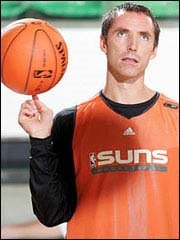
2) After we checked into our hotel, Citadines, we strolled down Las Ramblas, the city's most popular strip lined with trees and featuring scores of mines, entertainers, cafes and kiosks. One street artist was dressed in soccer attire doing tricks with a ball, including one where he kicked it over his head onto the back of his neck where he balanced it for some time. During our walk, I stopped by several newsstands, called La Vanguardia, to see what kind of sports magazines they sold. Most of them were soccer publications, but I came across two for baloncesto (basketball), which I bought for about three Euros each. One was called Gigantes and the other was Revista Oficial de NBA, the Spanish version of the NBA's Hoop Magazine. Gigantes, to no surprise, covers European basketball, its top teams and players. In the issue I picked up, there were several two-page pull-out posters of some of the top players in Europe. Most of the advertisements, which ran at the lower portion of the right page, promoted summer basketball camps throughout Spain. There was only one section featuring the NBA, which discussed the playoffs. With Revista Oficial de NBA, I noticed the staff from the masthead all work in Barcelona. What stuck out for me about the magazine was its focus on NBA forward Pau Gasol, who's from Spain and plays for the Memphis Grizzlies. There was an article recapping Gasol's season with the Grizzlies and a section in the back called "Las cartas de Pau Gasol" ("Pau Gasol's Letters") where Gasol himself wrote his predictions for the NBA Playoffs and explained who he thought should be the 2006 MVP. His pick was another foreign player Steve Nash, who was born in South Africa and grew up in Canada.

3) On our way to the Port de Barcelona to start our seven-day cruise, on the Norwegian Jewel, I asked the taxi driver, "Como es popular es el baloncesto en Espana?" He said, very ecstatically, "Muy popular!" I then asked him, "Sabe quien Pau Gasol?" And again he responded with a lot of excitement, "Oh, si, si!" Finally I asked him about the World Cup. He pointed to a schedule he had taped to his dashboard, which listed the days and times of when Spain was playing. We definitely got a kick out of seeing that.

4) One of the first things we did after we checked into our cabin was head toward the cruise's information center to inquire about the NBA Finals. We wanted to see if the sports bar was going to be airing Game 1 on Thursday (3 a.m. Friday our time). We asked a stodgy man at the desk several questions, but he kept repeating, "Sir, if enough people put in a request for the game, we may carry the broadcast. We're not sure right now." It was like we were speaking a foreign language to him. Perhaps if we had said, "World Cup," he would've understood better; as it is, most of the ship's employees were not from the U.S. but from the Philippines.

5) As newer and bigger cruise ships enter the overall fleet, there seems to be one component about them that keeps on expanding: Sports. On the Norwegian Jewel, which debuted last year, there was one game I had never seen on board a ship: Shuffleboard. Other than that, the regular activities included a gym, basketball/tennis court, golf cage, running track, sports video games in the arcade and card games in the casino. Several times during the week, the kids' center organized a late-night dodgeball contest on the basketball court. If you think about the all-included food you eat and midnight buffets you can't resist, there better be numerous ways to burn off that fat.

6) On our first sightseeing day, we took a tour bus up one of the mountains in Sicily into a small town called Taormina. As we walked through the quaint streets bordered by low-rising buildings with terracotta roofing, we noticed a lot of Italia soccer gear being sold. But what really caught our attention were several Miami Heat hats and shirts worn by tourists from the cruise. As we passed each other, we yelled in unison, "Go Heat!" Because of the Heat contingent on the cruise, we felt more optimistic that the Jewel would have no choice but to air the Finals.

7) The next day we went on a guided tour of the old city of Pompeii, which was buried under 21 feet of volcanic ash 2,000 years ago by Mount Vesuvius. Seeing the excavated ruins was probably the highlight of my vacation because you're able to walk through the most of the original streets and the remains of the foundation. One landmark we saw was the city's main amphitheater, which was the oldest in Roman times erected in 70-80 BC. Inside the 20,000-capacity arena were gladiatorial contests. The city also had a workout area where there once was assorted free weights and several swimming pools. On our way back to board the ship, we stopped at a newsstand by the dock in Capri. To compare with the Barcelona basketball magazines, I picked up an Italian publication called Superbasket. It contained mostly feature stories with hardly any pictures or advertisements, a bit boring to look at since I couldn't read it, of course. There was one article about Andrea Bargnani and his Benetton Treviso club team. Many say that the 7-foot, 250-pound Bargnani is the best player ever to come out of Italy and the potential No. 1 pick in this Wednesday's NBA Draft.

8) Back on the cruise later that night, we made a pass by the information desk one last time to get an update on the NBA Finals situation. A nicer man said that unfortunately the cruise wouldn't be showing the game because ABC, the host broadcaster, hadn't sold the television rights to the Norwegian Cruise Line. We asked if there was a way we could buy the game individually for our room, but that also wasn't a possibility. We were disappointed, but then again, we probably would have passed out before the tipoff at 3 a.m.

9) The following day we headed to Rome. When we got there, our tour bus parked a few blocks from the Coliseum, right next to a soccer field where two teenagers were practicing a penalty-shot situation. Although the playing ground was uneven dirt, the kid who was kicking was extremely accurate with every attempt, bending the ball perfectly like Beckham. I thought about all the dreams of American streetball players back home and the long hours they put into shooting into hoops with no nets or backboard squares. And what do a lot of them end up having in common? Some serious game.

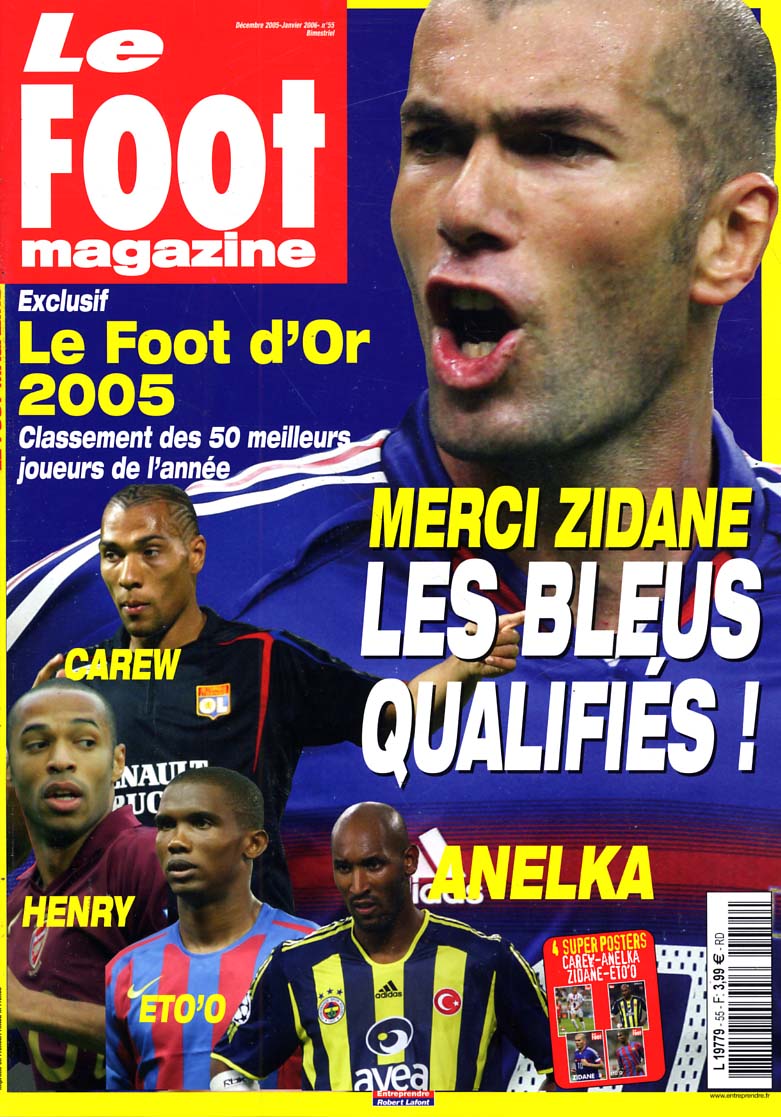
10) The last stop on our cruise was Villefranche, France, located on the magnificent French Riviera. From there, we took a 10-minute train ride to Monte Carlo where we walked on the street used in the Formula 1 Grand Prix just a week earlier. Part of the track rides along the marina packed with 60-foot yachts, goes up the hill around the famous Casino Royale and then comes back down near the five-star Hotel de Paris. Just to get some perspective how expensive the hotel is, when we had lunch in its outdoor cafe we ordered three club sandwiches, two orange juices and two Cokes, and it was 71 Euros. That's around 90 dollars! After we left Monte Carlo, we took a 15-minute train ride to Nice, France. We didn't have much time there because we were running behind and didn't want to miss our cruise, but I was able to browse one of the train station's newsstands. I was in a hurry, so I quickly grabbed one called Le Foot (pictured above). Under its heading, it said, "Special Mondial," which was a reference to the issue's World Cup preview. Inside, the pictures of the players were as tall as the size of the page, an underlying theme as to why soccer is as big as it is in Europe, and still kickin'.

* * *

The day after I arrived back in my apartment, I picked up the New York Times outside my front door and turned to the sports section. The top headline was: "Americans Are Ready, Without Excuses." Although I missed my European whirlwind tour, I was proud that my country was participating in the World Cup after being immersed for a week overseas in a soccer-frenzied environment. This is a time, only once every four years in sports, when unbridled patriotism sweeps across the globe as millions of fans reach for their face paint, costumes and musical instruments. The World Cup can bind or break a nation. Aren't you just a little bit curious?

Sunday, April 30, 2006


SHAQ MORE ON THE PATERNITY ATTACK

Shaquille O'Neal's wife, Shaunie Nelson, is due to deliver the couple's fourth child - a girl - today at South Miami Hospital. That will be six kids for Shaq (he has a daughter and Shaunie has a son from previous relationships).

No signs of a letdown from the "Shaq Daddy" department, but he sure can't get his feet off the ground like he once did as a Blue Chip. To make matters worse, in the years to come, Shaq (pictured) may be celebrating his upcoming daughter's birthday during the same time the Miami Heat embarrassingly lost to the younger Chicago Bulls. Yesterday, the "Baby Bulls" tied the series at two games apiece. In Game 3, Shaq had just eight points to go along with seven turnovers against a weak frontline of Malik Allen and Michael Sweetney.

Speaking of the "Baby Bulls," Shaq should name his infant Beth - the closest female version to Ben - after Bulls guard Ben Gordon who has completely ripped through the Heat perimeter defense like a scissor. Respect is due and it should be wrapped in Shaq-a-Claus' pink blanket.

Sunday, April 16, 2006


"40 MINUTES OF HELL" AT MISSOURI SPELLS MISERY

When Mike Anderson (pictured) was introduced as the University of Missouri's new men's basketball head coach several weeks ago, he said that "the fastest 40 minutes in basketball" were coming to campus. What he failed to mention was how long until those 40 minutes were going to be on display for antsy Mizzou fans who haven't seen their team reach the NCAA Tournament since 2003. Well, it's going to be more than a year until, at the very least, Missouri is back on the Big 12 basketball map. That's because the Tigers are coming off a year where they finished second to last in their conference. It doesn't help that they face a year of recruiting probation for off-the-court issues. That begs the questions: Did the university rush too quickly to find a replacement for Quin Snyder and was Anderson the right choice?

After Snyder resigned midway through last season (many thought he was pushed out), Athletic Director Mike Alden organized a search committee to find his successor. Alden's advisors included Assistant AD Gary Link, Senior Associate AD Mario Moccia, Deputy Chancellor Mike Middleton and former All-American Tiger guard Jon Sundvold. One of the candidates they interviewed was Mike Anderson because they were attracted to his "40 minutes of hell" style of basketball. And they figured high school prospects would feel the same way.

Well, that hell is definitely on its way. The team has to deal with a loss of one scholarship and being hit with one year of recruiting probation due to Snyder's off-the-court issues. Several years ago, he recruited point guard Ricky Clemons from junior college who turned out to be a huge problem. Clemons choked his girlfriend and ended up in jail. Later, while on house arrest, he crashed his car. Snyder was obviously not the one breaking the law, but his recruiting antics had brought in a hot head. You could make the argument that Snyder did his job by leading the Tigers to the tournament in 2003, but in the last two years, the team has nose-dived to near bottom of the Big 12 conference. He had problems maintaining consistency in the team's work ethic and style of play. That's why Snyder had felt the wrath from Alden who is now on the hot seat himself. Tigers basketball is long overdue from returning to the glory days when legendary coach Norm Stewart was at the helm. These days, there's more buzz around the football team - this past season, they won their first bowl game in 20 years.

So, how does Mike Anderson fill the void left by Snyder? From a statistical standpoint, very well. In four seasons at the University of Alabama at Birmingham, he was 89-41, guiding the Blazers to three consecutive NCAA Tournament appearances and even going as far as the Sweet 16 in 2004 after upsetting No. 1 Kentucky. Credit goes to his hard-nosed defensive philosophy, which is where the "40 minutes of hell" expression derives. From the first year he took over at UAB, he brought the team instant success, and Missouri hopes he can do the same for its underachieving men's basketball program.

Anderson also has a reputation in the recruiting world. It's no coincidence that he's getting paid $850,000 per year – one of the highest salaries in college basketball. Anderson has contacts in some of the hottest basketball areas for rising stars, including Chicago, Memphis and cities in the Southeast – a mostly chartered region for football talent, not basketball. Having Anderson is a breath of fresh air, not only in the sense that he's been successful in such a short period of time. You see, Anderson is the first black coach at Missouri, which is a very attractive situation for young, black athletes who are looking for a demanding father figure who demands discipline and relentless hustle until the final buzzer sounds. It's not that white players won't want to come to Missouri; having a black coach with a wider network of contacts will open new recruiting doors.

But it sounds like the Tigers team is turning into a family tree, which is a cause for a concern. Anderson decided to keep Melvin Watkins, the interim head coach last year after Snyder stepped down. Melvin's son, Marcus, will be a senior guard in the fall. In addition, Anderson hired his nephew T.J. Cleveland from UAB to be one of his assistants. Perhaps Anderson is doing all this just in case the team does poorly, so he'll have the support from his coaching staff – I mean, family. Thinking nepotism? Well, it all sounds too chummy in my opinion. At the same time, the family system could work. Think of the Bowden brothers at Florida State, the Shula father-son combination with the Miami Dolphins and the Thompson generation at Georgetown.

A major threat, though, to Anderson's success lies within the upcoming Big 12 conference forecast, which calls for an increase in competition. Watch for it to reach new heights in 2007 when Kansas State should land the top two prospects in the country, O.J. Mayo and Bill Walker from Ohio's North College Hill High School. They're very interested in playing for Bob Huggins, who recently became head coach of the Wildcats. Huggins spent the previous 16 seasons at Cincinnati where he went 399-127, including 14 straight NCAA Tournament selections and a Final Four trip in 1992. Furthermore, he coached a handful of NBA prospects, including Kenyon Martin, Nick Van Exel, Ruben Patterson and Danny Fortson.

Anderson may not have been the best choice for Missouri basketball, at least not now. The team is in its rebuilding stage and will struggle next season without any blue-chip prospects. The school could've waited until next season to hire a new coach and let Melvin Watkins handle the reins for one more season, but that wasn't going to happen for two main reasons. First, Alden needed to make a quick and smart decision because he was on the verge of getting fired. Second, there were a bunch of solid coaches on the market and they all were going to be snatched up. If the Anderson project doesn't work right away, look for Alden to be axed.

Anderson will be able to keep his office longer, but in what kind of condition will it be? Huggins should've been the choice even though, like Snyder, he was cited for off-the-court incidents (Huggins was charged with DUI). Missouri probably wanted to shy away from previous run-ins. But Huggins' track record speaks for itself. In addition, he's about to land the nation's best recruiting class in 2007, which is when Missouri basketball will regain its scholarships and won't be on recruiting probation. Unfortunately, by that time Missouri will be in misery. In college sports, coaches are really known as figureheads as their name alone boosts recruiting possibilities. Huggins is one of those guys. And unlike Anderson, Huggins has had long-term, consistent success.

Sunday, March 26, 2006


CAN SPORTS SACK LOCAL NEWS?

Since I've been working at CBS in New York City, several of our weekend local newscasts have been canceled - either Saturday at 6 pm or the Sunday 6:30 pm show - because a sporting event ran longer than expected. Sometimes, the game would feature teams cross-country from the Tri-State area, but the network would still commit to the final buzzer. That just shows you the overall power of sports in our society. A hard-working, deadline-driven, pressure-filled team of writers, editors, producers, reporters and anchors can create a 30-minute show down to the second, but a last-second, game-tying three-pointer at the end of regulation can completely erase someone else's purpose for going to work on a given day. Quite interesting.


Well, I spoke with former CBS Sports Senior Vice President of Production and Programming, Rick Gentile (pictured), to learn more about the local news business, how it's adapted to emerging electronic media technologies and its future in competition with sports television.

Mr. Gentile, who was previously a 10-time Emmy Award-winning sportscaster, headed CBS' coverage of the Winter Olympic Games from 1992 to '98 in Albertville, Lillehammer and Nagano. Currently, he is a sports management professor at Seton Hall University where he recently directed the Seton Hall Sports Poll, the first-ever university-based, ongoing polling service.


Q: What are your thoughts on the current state of local news in regards to quality and viewership?
A: I think local news has not changed all that much in quality over the years. It's obviously easier to get live feeds from the field and local stations have all increased the number of live-field reports. I find that true not just in the New York market, but in smaller markets as well. I have a house in Pennsylvania that receives Scranton local stations, and while the quality is not up to New York standards, they still feature multiple live or taped field reports throughout the show. I think viewership has probably not suffered as much as overall network viewership - too many choices, etc. But the landscape is extremely competitive, and even if viewership decreases, quality will continue to improve, especially technologically.

Q: What factors go into deciding whether a sporting event should extend into the local news time slot? Who makes those decisions?
A: The decision as to whether sports will run over into news time is made ultimately by the local station. It always has the ability to pull the plug on the network, but rarely does so to avoid incurring the wrath of the viewers. It's hard to justify cutting off the last few minutes of a close contest or even a blowout to go to local news. In the case of sports running into the network news, that decision is made jointly by the sports and news divisions of the network. Again, usually sports wins and stays on and the news broadcast is shortened or completely eliminated. That's not a big deal on the network level, but a local news show that is eliminated carries a significant cost factor. In some cases, with the PGA Tour and NFL for example, the networks are contractually committed to stay to the end of the event.

Q: Do networks see that 30-minute news window, which is a couple of times per day, as a blockade from adding more sports programming?
A: I do not believe the networks see the local news show as problematic. If an event needs to be scheduled past the news window, such as the Masters and the NCAA Tournament Selection Show, the network will notify stations well ahead of time. Networks are generally capable of scheduling comfortably, allowing for an off time of 6 pm on weekends except for the examples I mentioned before, such as the Masters. Runover is another issue as I discussed earlier.

Q: If networks add more sporting events to their programming, can local news see its demise? If not entirely, what about news during the weekend when most games are going on?
A: I do not see more sports programming on the networks affecting local news, and rarely does it impact weekday news broadcasts. The issue is almost exclusively a weekend issue except for those rare weekday sportscasts which are scheduled well in advance, so the stations know what's in store for them. Affiliated stations need that local news time for revenue purposes. They make more money on the 30 minutes of local news than on the local spots they would get in those corresponding 30 minutes of network sports. If the network sports divisions want the continued cooperation and clearance of local stations, they need to respect the financial needs of those stations. And local news is a big part of those financial needs.

Q: With the advent of streamline video, newscasts are transitioning into webcasts. Is this reason enough that networks can say, "There's a higher financial demand for sports television, so if you want to watch the news, turn to the Internet?"
A: But the problem is that there isn't necessarily more money in sports, certainly not for the local stations. Networks need cooperation from the stations; the majority of stations are not owned by the network. If the stations revolt and refuse to carry the network's sports programming, which raises all sorts of other issues, the networks will be hard-pressed to command the kind of advertising rates without the 100 percent clearance they're accustomed to. Those sports programs generally do not make money for the local stations. They add an audience that carries over into local programming, like news, that does make money. It's a symbiotic relationship, but there's a delicate balance that has to be maintained.


Q: Would you say the Dan Rather, Peter Jennings and Tom Brokaw era of news anchors is ancient now?
A: I think the days of the "Voice of God" anchor are probably coming to an end. The audiences for those shows have really eroded over time at a higher rate than general network programming. I think network news will continue to try to be more entertaining and start to resemble morning news shows more and more - more teases, more promotion, more women correspondents if not anchors, etc. The networks will try whatever it takes to get more people to watch. Obviously, simply presenting "hard news" as Dan Rather used to say isn't getting it done.


Q: Do young people, 18 to 34, really care about who's anchoring the news? Aren't they more attuned to sports TV personalities who nowadays act more like entertainers?
A: I don't think young people care whether Tom Brokaw or Bob Schieffer or whoever is anchoring the network news shows because I don't think young people are watching at all. If they are watching anything it's CNN and FOX News, but more likely they're going to the web for their news fix if they're going anywhere at all. I think, for the most part, the networks have given up trying to get young people to watch network news shows, or news magazine shows for that matter. They probably are more attuned to sports personalities - not necessarily TV sports personalities. I don't think they care if Jim Nantz or Bob Costas is hosting a show. It's the show or event that counts and has to be compelling. Very few on-air personalities can command an audience: John Madden to some extent in football, John McEnroe in tennis, maybe Dick Vitale in basketball and possibly Charles Barkley. For the most part, the game's the thing.


Q: Do you think the local news broadcast will change its format in the future? If so, how?
A: I think local news broadcasts are always changing to adapt to or try to attract new audiences. Graphics are always changing and music is becoming more and more a presence. That's not a new phenomenon. It's the constant mandate for local news to try to attract new audiences - attempts to hire younger, hipper anchors and more minority representatives depending on the market. But keep in mind that local news is not network news - two completely different animals.

Q: If 24-hour local news channels exist, such as New York 1, why do networks still compete with each other over their local news programs when they're essentially airing the same content?

A: Because there's money to be made in broadcasting local news. The costs are controllable to a great extent and it gives the local station an opportunity to brand itself in the community. For example, this past weekend the Scranton CBS station preempted all the network basketball games on Saturday to air the St. Patrick's Day Parade in Scranton from 1 to 4 pm. [The parade] is sold all the time and [the station] keeps all the money. Local news gives stations the opportunity to endear themselves to the local market. So yes, they all air the same stories, but they all try to give [their audiences] the personality of the station. There is often a combining of news shows - two or more stations in the same market might air the exact same news show - but each sells it separately. Local news is critical to local stations.

Q: Right now, the FCC restricts the number of hours per day and per week a station can air network programming. The only exceptions are long-running sporting events and major news events. Do you think these rules will change?
A: The FCC rules are always changing to some degree, but no, I don't think they will change too drastically. The point is to avoid monopoly of news distribution - allow for many voices in each community. In giving networks the right to own more stations representing a higher percentage of homes in the U.S., the FCC is already granting the networks more power over public opinion. If the only voice the viewer hears is the voice of Viacom or G.E. or Disney or FOX, we're all in trouble. That's why local stations are important bearers of information to the community. There are other FCC rules covering public service announcements, equal time and access to candidates prior to elections, obscenity issues, etc. Each network has a program practices division stocked with lawyers overseeing programming and issuing proclamations.

Q: If sports can't entirely take over local news, can reality shows be added to the equation, especially when you consider "American Idol" dominated the Winter Olympics in ratings?
A: I don't see reality shows cutting into local time any more than sports. "American Idol" beat the Olympics this time around. Maybe next time the Olympics beat "American Idol," but they lose to the next great sitcom or drama. Who knows? But the one thing I think will continue as long as the TV environment stays on the same course is that local news, and generally local programming, will continue to be a cash cow for the local stations. Many stations would rather run "Oprah," or "Jeopardy," or "Wheel of Fortune" than any network show.